
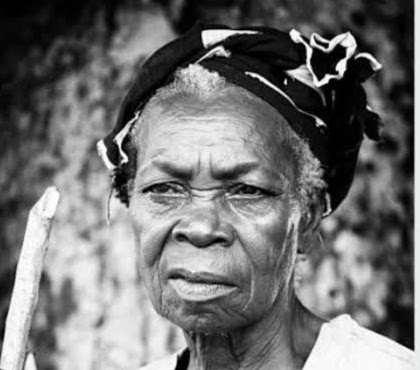

Ruth Chinangwa, a 76 year old granny from Thomu Village in Phalombe district says the simplest way to describe her life is that it is painful. With three orphaned grandchildren whose parents died of AIDS to look after and nobody to help her with the responsibility, Chinangwa says her life is difficult as she struggles to feed, clothe and educate her grandchildren.

She says she had high hopes that once the tonse administration introduces a pension fund as promised during election campaigns, her life would improve, however failure to implement the scheme has left her with no hope.
“I am poor and mostly sleep on an empty stomach, I can’t afford basic needs and do not have anyone to support me. My husband died many years ago, I thought once I start receiving the allowance my life would change but I am still suffering,” Chinangwa said.
Equally, 70 year old Mathews Bamusi from Chibwana village in Rumphi district faults the tonse alliance for failing to establish the pension fund, saying this is disappointing for the elderly population who are struggling to afford a decent standard of living amidst harsh economic conditions.

“ It’s disheartening because this is not what we expected , I am poor and so are many other elderly people in the country , the scheme was a source of hope for a better life , but now there is no faith ” Bamusi said.
The introduction of the pension fund was one of the campaign promises by the Tonse administration prior to the 2019 general elections and was aimed at easing the social economic challenges of the elderly in the country.
The scheme which promised a K15 000 monthly allowance came as a rear of hope to the elderly population at a time the majority are struggling to afford a decent life due to increasing socio-economic difficulties and changing family ties which is making it hard for children to look after their ageing parents.
The pledge followed findings of a study report on the feasibility of an old age pension in Malawi commissioned by the ministry of Gender, Children, Disability and Social Welfare in 2016 which exposed extreme poverty among the older population.
According to the report, existing formal and informal social security systems such as Katapila, Village Savings and Loans, Social Cash Transfer Programs and Public Work Programs have limited scope and coverage, leaving a large group of poor Malawians, including older persons without adequate support.
However, three years down the line since the Tonse alliance took over power, the pension fund which was expected to roll out in June 2022, remains a dream among the older population, as authorities have failed to roll out the initiative, with no hope of the pledge coming to pass anytime soon.

Fred Simwaka – spokesperson in the ministry of Gender, Children, Disability and Social Welfare, has told MIJ online that treasury failed to disburse funds to the ministry amounting to 9.2 billion kwacha to commence the project in the 2022-2023 national budget.
“The ministry was not allocated any funds in the budget to roll out the project, government had focus on key priority areas because it was a year of austerity measures,” Simwaka explained.
On the other hand, Simwaka said the ministry has increased the number of elderly people to benefit from the social cash transfer programme as a way of uplifting their livelihoods.
However, failure by the Tonse administration to implement the project has disappointed advocates of rights of the elderly who feel the situation was a poverty trap for the ageing population amidst rising poverty levels in the country.

Andrew Kavala, executive director for Malawi Network of Older Persons Organizations said it is disheartening that the Tonse alliance has not lived up to its promise.
“This was a promise made to a vulnerable group, we had hope that this was the perfect start to improving the welfare of the elderly but now nothing has been done. When the alliance came to power, it immediately engaged the ministry of economic planning on this project and we thought we were making progress.
We agreed that government should allocate funds for the scheme in the national budget and identify beneficiaries, but up to now nothing has been done, the Tonse administration has failed to walk the talk,” Kavala said.
Meanwhile a 2022 report by the World Health Organization indicates the following findings;
- In 2020, the number of people aged 60 years and older outnumbered children younger than 5 years
- Between 2015 and 2050, the proportion of the world’s population over 60 years will nearly double from 12% to 22%
- By 2050 , the world population aged 60 years and older will double to 2.1 billion
- The number of persons aged 80 years older is expected to triple between 2020 and 2050 to reach 426 million.
- In 2050, 80% of older people will be living in low and middle income countries.
- By 2060,one in six people in the world will be aged 60 years and over
Given such statistics, Justin Derbyshire, executive director for Help Age International says it is important for governments to develop long-term action plans to safeguard the welfare of the elderly.
“Older people are unfortunately in lower and middle income countries disadvantaged for the fact that they don’t have sufficient health care, sufficient health workers trained in the issues that affect them or the provisions to equipment and support they need. Most elderly people lack success to any form of social pension, therefore with the lack of ability to get any work, they struggle” Derbyshire said.
Besides, a 2018 joint research by Help Age International and Malawi Network for Older Persons established that the social cash transfer program is an effective instrument to improve the livelihoods of poor and vulnerable older Malawians and their households.
“Social Cash transfer programs contributes not only to improvements in older peoples subjective well-being, but also to substantial and statistically significant increases in overall household consumption, food security, ownership of assets, income and revenues, as well as improvements in children’s education and provision of their material needs,” reads part of the report.
With this, Walita Mkandawire, northern region coordinator for human rights lobby group, HRDC feels it is vital for authorities to work tireless and find means for introducing the elderly pension scheme to compliment already existing programs as a way of protecting older people from poverty and abuse.
“The elderly are facing various forms of abuse in the country, from witchcraft accusations to physical abuse, this is in spite of government expressing its commitment to protect them, we need this fund and efforts have to be strengthen to ensure its establishment” Mkandawire said.

Further, Michael Kayiyatsa, executive director for Centre for Human Rights and Rehabilitation, points out the need for the nation to have long-term and effective solutions to promoting the healthy-wellbeing of the elderly.
“ Violations of the rights of older people lead to exclusion, poverty and discrimination, better protection of the rights of older people will allow Malawi to capitalize on the potential that older people represent” Kayiyatsa said.
Also, in a 2019 study titled Care for Older People in Malawi: A Situation Analysis, local researcher Charles Nyasa urged authorities to strengthen measures aimed at promoting the contribution of the elderly to national development.
“Addressing issues of the elderly is not the same as addressing the issue of population aging. With the life expectancy it can be assumed that everyone will get old eventually. Therefore instead of putting individual efforts to address individual related issues as they come, focus should be put on cultivating the potential of the elderly.
Particularly through investments in their health and long-term care with aims to maximize their functional ability, potential to maintain gainful employment and health-related quality of life.” reads part of the report.
Further, a 2022 policy brief report by global humanitarian agency, Relief Web indicates that most elderly people in Malawi have poor food consumption and lack dietary diversity. The report states that nearly all older people interviewed indicated that their food security has worsened in the past six months prior to the research.
According to the audit, the most common coping mechanism adopted by older people in dealing with the worsening food insecurity include restricting the number of meals eaten per day , consuming less expensive food and reducing meal options .
Aside from facing economic challenges, the elderly in Malawi are also suffering from physical abuse with the Malawi Network of Older persons disclosing that in 2022 alone, 15 elderly women were killed, 88 harassed for various reasons with the majority abused on witchcraft accusations.
