


Childbirth is meant to mark the beginning of life. But for some women, the hours or days after delivery quietly turn dangerous not because of complicated surgery or a rare disease, but because of infection.
One of the most serious threats facing mothers in the country is maternal sepsis, a life-threatening condition that occurs when the body’s response to an infection damages its own organs and tissues.
It develops when bacteria enter a woman’s body during pregnancy, childbirth, or shortly after delivery. The infection may begin in the uterus, the bloodstream, or even in surgical wounds.
Latest records from the Ministry of Health indicate that about 570 women die each year in the country due to maternal sepsis infections a situation health experts describe as deeply worrying.
Findings from the Confidential Enquiry into Maternal Deaths in Malawi (2020–2022), conducted by the Malawi National Committee on behalf of the Ministry of Health’s Reproductive Health Directorate, revealed that infections are among the leading causes of maternal deaths in the country.A
Out of 809 cases reviewed, 201 deaths were linked to infections, representing about 24.8 percent of all maternal deaths studied.
Among other findings, the report revealed that health system failures contributed to about 85 percent of infection-related maternal deaths.
“The failures included delays in starting treatment even when a woman’s condition was critical, inadequate monitoring after delivery or surgery, and slow referrals from smaller health facilities to larger hospitals. In some cases, facilities lacked essential equipment, blood supplies, or trained staff to manage emergencies,” reads part of the report.
The revelations have alarmed experts, who have called on the government to increase budgetary allocations to the Ministry of Health, particularly for maternal health.

In an interview, health expert Benjamin Chinoko stressed that underfunding in the health sector continues to negatively affect maternal health outcomes in Malawi.
He explained that limited financial resources weaken service delivery, making it difficult for health facilities to provide quality care to pregnant women. Chinoko added that the problem is further worsened by mismanagement of the limited resources that are allocated, leading to shortages of essential supplies, equipment, and trained personnel.
“Underfunding in the health sector directly affects service delivery. In many cases, the little that is allocated is also mismanaged. The result is a shortage of resources required to implement effective healthcare interventions. Most of the avoidable deaths we see occur in under-resourced settings,” said Chinoko.
Concurring with Chinoko is safe motherhood expert Dr. Dorothy Ngoma, who served as a presidential advisor to former President Lazarus Chakwera on girls and safe motherhood. Ngoma has described maternal sepsis as a serious threat to mothers in the country and has called for concerted efforts to reduce the numbers.

She emphasized the need for increased funding and more training of health workers on how to properly manage infections.
“The government must channel more funding toward maternal health so that our mothers are not at risk of sepsis,” said Ngoma.
Ngoma also called for civic education among women about maternal sepsis so that they can seek medical attention promptly when they notice warning signs.
But hope is not lost, following the introduction of a special intervention aimed at improving maternal health outcomes called APT-Sepsis, short for Active Prevention and Treatment of Maternal Sepsis.
This intervention, developed by the Malawi-Liverpool Wellcome Research Programme, follows World Health Organization guidelines for preventing maternal sepsis and is tailored for low-resource settings like Malawi

According to Regina Makuluni Kachitsa, Trial Manager for the APT-Sepsis programme at Malawi-Liverpool Wellcome Research Programme , the intervention focuses on transforming healthcare workers’ behavior and strengthening clinical practices to ensure that mothers receive timely and effective care.
She explained that the programme promotes early detection of infections, proper prevention measures, and rapid response to suspected sepsis cases.
“The intervention came about following the high number of deaths that the country registered in 2023 due to maternal sepsis,” said Kachitsa.
Kachitsa further noted that the intervention is built around three key areas: improving hand hygiene, enhancing infection prevention and treatment, and ensuring early recognition and management of sepsis through the FAST-M care bundle.
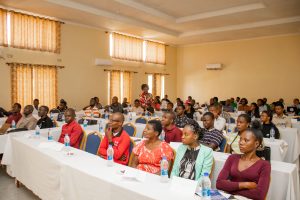
To support implementation, the programme incorporates structured training, mentorship, and the use of clinical tools such as observation charts and checklists, alongside continuous performance monitoring within health facilities.
Kachitsa added that the programme was tested through a randomized controlled trial conducted in selected health facilities in Malawi and Uganda, where it demonstrated a 32 percent reduction in maternal infection-related mortality and severe morbidity.
She emphasized that the results highlight the programme’s potential as a low-cost and scalable solution capable of strengthening maternal healthcare systems in resource-limited settings.
Although the programme has not yet been fully rolled out to all public hospitals nationwide, its success has positioned it as a promising intervention, with stakeholders now exploring opportunities for broader adoption.
Commenting on this an economic expert Happy Chirwa has commended the intervention but has urged the government to prioritize increased funding toward the health sector, describing it as critical to the country’s overall development.
He emphasized that a well-funded health system not only saves lives but also contributes to economic growth by ensuring a productive population.
“Investing in the health sector is investing in the country’s development. A healthy population is more productive, and this has a direct impact on economic growth. Government must therefore prioritize adequate funding to the sector,” said Chirwa.
Chirwa further noted that no country has ever achieved meaningful development with a weak health sector.
The rising cases of maternal sepsis in Malawi paint a clear picture of a health system under strain, where preventable deaths continue to occur due to delays, shortages, and systemic failures. While external partners and donor-funded programmes such as APT-Sepsis offer promising solutions, they cannot be the sole backbone of the country’s healthcare response.
Sustainable change must come from within.
The government has a critical responsibility to take decisive action by increasing funding to the health sector, ensuring proper management of available resources, and strengthening healthcare systems at all levels. Relying heavily on external support is not a long-term solution. Instead, there is an urgent need for self-driven commitment, accountability, and investment in maternal health.
As the saying goes, “Self-help is the best help.” This highlights the importance of taking responsibility and acting independently rather than depending on others. Only through proactive government leadership and internal reforms can Malawi effectively reduce maternal deaths and move closer to achieving its national and global health targets.
The lives of mothers depend not on waiting for help, but on actions taken now.
