
Alarming figures: Cervical cancer crisis in Malawi

The numbers are alarming: Nearly three thousand women in the country succumb to cervical cancer every year. Out of twenty thousand women screened annually, Doctors Without Borders report that about four thousand are diagnosed with the disease.
Marion Perchayre, head of mission to Malawi at Medicines Sans Frontiers, emphasizes that despite being a deadly disease, cervical cancer caused by the Human Papilloma Virus is preventable through HPV vaccine.
Perchayre: We need to work hard.

However, due to low vaccine uptake, Perchayre notes that the country continues to register a high HPV prevalence rate.
“Cervical cancer is mostly triggered by the Human Papilloma Virus, but it can be prevented by HPV vaccination. So the coverage of vaccination is one of the major challenges in the fight against cervical cancer,” says Perchayre.
“Some studies have shown that if you start vaccinating 80% of the 9 to 14 years old girls and you start vaccinating for cervical cancer, all women after 25 years old in a population like Malawi, If we had started doing that in 2020, we would reach epidemic control in 2100,” added Perchayre.
In addition, George Chilinda, Gyneoncosurgeon at MSF in Malawi, attributes the status quo to low coverage in cervical cancer screening and also a high prevalence rate of Human Immunodeficiency Virus (HIV). He adds that Malawi has the highest mortality rate, with 51 deaths per 100,000 recorded every year—a figure seven times the global rate.
“At a global level, the country has the highest number of deaths that come because of this disease,” says Chilinda.
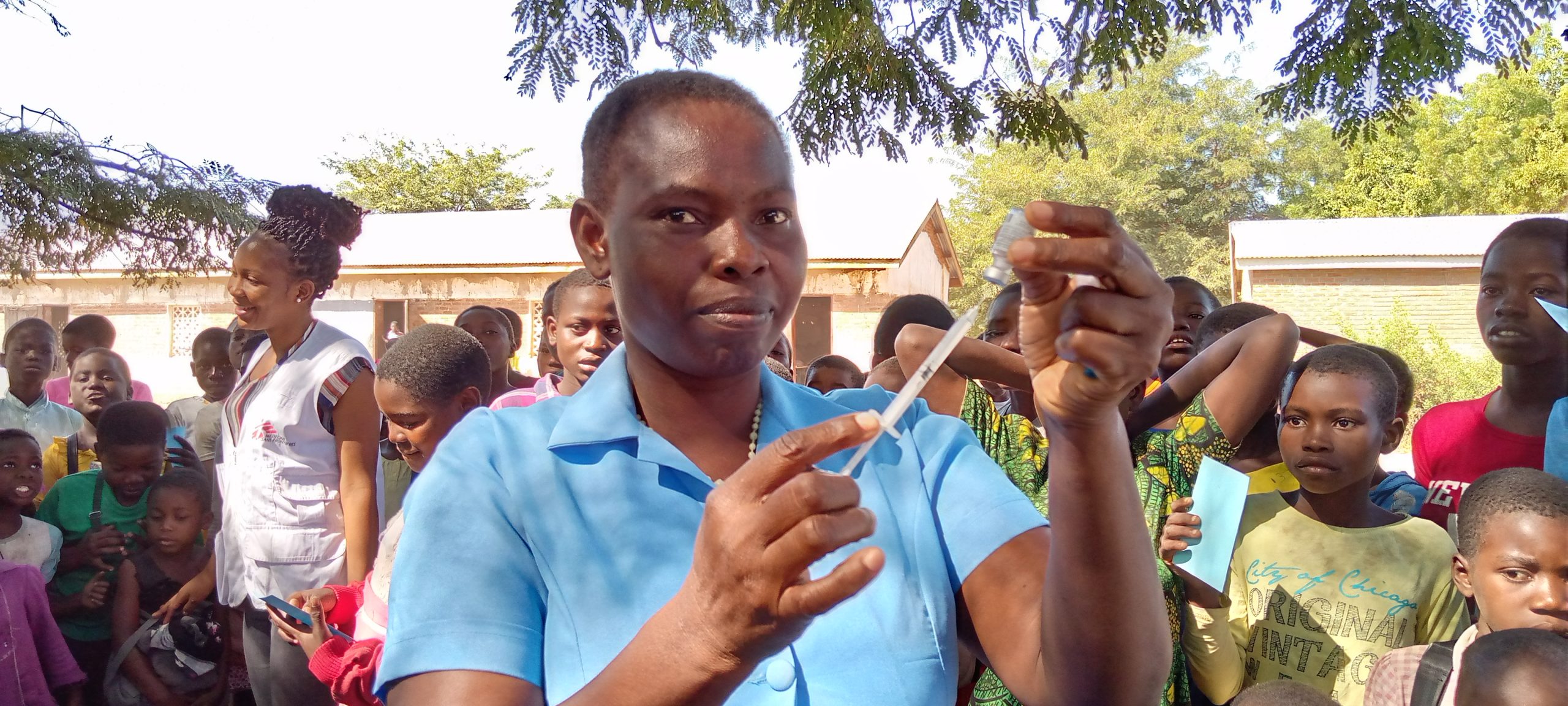
Some of the vaccines being administered.

“But in terms of prevalence rate, Malawi is in the second position, with Lesotho topping the list. There are a number of reasons that are causing this to happen. Number one, high Human Papilloma Virus prevalence rate. Number two, high Human Immunodeficiency Virus prevalence rate. And finally, low coverage in cervical cancer screening in the country,” explains Chilinda.
Echoing Chilinda, Presidential Advisor on Safe Motherhood, Dorothy Ngoma, blames the situation on resource constraints, mainly in rural areas.
“Healthcare services in the rural areas are stunted because these are distant areas, and ideally, we should have a Health Center every 5 kilometers or 10 kilometers,” says Ngoma.
Maziko Matemba, a health rights campaigner, agrees with Ngoma.
“We need to make sure that resources which are there are being distributed equally. We should make sure that all the services have been provided, including testing for cervical cancer to mothers seeking antenatal care,” adds Matemba.
Through its lens, the Parliamentary Committee on Health feels this setback emanates from the country’s dismal interest in fighting some diseases.
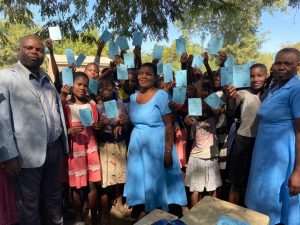
Some of the recipients.

For instance, Dr. Mathews Ngwale, chairperson for the committee, wonders why the country hasn’t had facilities tailor-made for cancer patients.

“When it comes to vaccines, the issue now jumps into money. The country does not have money, and we are already at the moment fighting for the Cancer Center in Lilongwe to be completed; that’s priority number one,” says Ngwale.
That said, Ngoma thinks prevention remains a top priority if the country is to ably curb the disease.
“We need to be working on issues of preventive and promoting healthcare, because there are a lot of things that we can do to prevent the disease, one thing being playing it safe when it comes to sexual issues,” explains Ngoma.
No wonder; Camille Defforges, one of the senior managers at Medicines Sans Frontiers, feels that if Malawi is to overcome cervical cancer, vaccination of young girls aged between 9 to 14 years old has to be considered a priority.
Complementing government’s efforts, Defforges says his organization too is conducting vaccination campaigns in districts like Phalombe, Machinga, and Nsanje targeting over 117,000 young girls.
“Something very important is that giving the vaccine to young girls; it is not only individual benefit, but it means that we decrease the chances of the girls of catching the virus,” says Defforges.
So, this story also being about HPV vaccine, two mothers, Felister Laudon and Chrissy Ostin, speak out their motivation each for having vaccinated their daughters.
Booklets being filled with details.

“I think it is very important for my child to receive the vaccine. Because these days there are a lot of diseases so it is better to be protected. So this campaign has helped us a lot, our children are now protected from the virus. It is my advice to my fellow mothers to ensure that their daughters have received this vaccine,” explains Laudon.

And concurring with Laudon is Ostin.
“So this time around, my daughter was telling me that doctors came to her school, and that, together with other young girls, she was vaccinated against the disease. I received the news with happiness because I know that the disease exists,” says Ostin.
Echoing Laudon and Ostin on cervical cancer vaccination, Natasha Ngolleka, aged 22, a resident of Ndirande Township, Blantyre, says screening is also key to early detection of the virus for early treatment.
“Screening is very important for every woman because it helps to know whether one has cervical cancer or not,” notes Ngolleka.
But what do the advocates against cancer in the country have to say in all this?
While praising the government for policies and strategies invested in fighting cancer, a lobby group, Cancer Survivors Quest, thinks the country can go an extra mile. In particular, Chikhulupiliro Ng’ombe, executive director for the organization, points out awareness as one of the issues to address.
“There is a bigger problem that stems from being able to empower the citizens to use the facilities and understand what they need to do in terms of management and prevention, enabling them to go to the hospitals early, and the solution for that is awareness,” explains Ng’ombe.
All sides heard from, what are the views of authorities in this discussion?
Brighton Sibale, Cervical Cancer Programs Officer, says in its quest to effectively fight against the disease, the government has adopted the 90-70-90 strategy devised by the World Health Organization to vaccinate 90 percent of the targeted group by 2030.
“Currently we have measures put in place trying to combat cervical cancer in Malawi. In this strategy, we’re trying to have 90 percent of our targeted people vaccinated, and at least 70 percent to be screened and finally, 90 percent of those screened to be treated,” says Sibale.
However, he sees fog ahead to realize this dream given the country’s resource challenges for improved awareness, prevention, and treatment.
“We are only around 61 percent of our facilities across the country. This means this treatment is not being done in some areas, so that’s the challenge because, yes, we will create demand, but people will not get the service because it is not yet there,” explains Sibale.
In spite of the country having adopted the 90-70-90 strategy, tales of resource constraints and dismal awareness mean there are remaining gaps to address to effectively combat this disease. But for now, it’s time to build from what has been achieved.