
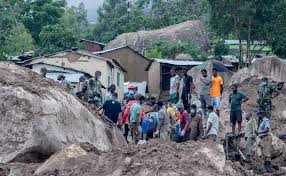

From riverbanks to mountain slopes, illegal settlements are expanding across Malawi’s cities, exposing a democracy where laws exist, but enforcement is negotiable. This isn’t just about bad settlements, it’s about the quiet erosion of governance in a democracy, where rules exist but are no longer enforced, and the consequences are literally life-threatening – Tamanda Matebule reports.
In Malawi’s cities, signs of danger are no longer restrained.
Homes cling to fragile hillsides. Others line riverbanks that swell with every rainy season. In places like Soche, Ndirande, Ntandire and Likangala, entire communities exist in spaces the law explicitly forbids.
Yet the settlements keep growing.
This is not simply a story of urban poverty or housing shortages. It is a story of governance and of laws ignored, institutions weakened, and a democracy struggling to enforce its own rules.
Three decades after the dawn of multiparty democracy in 1994, Malawi’s urban landscape is increasingly defined not by planning, but by negotiated illegality.
When the Law Exists only on Paper
Malawi is not short of laws.
The Physical Planning Act (2016), the National Urban Policy (2019), the Local Government Act, and the Disaster Risk Management Act (2017) all provide clear framework for how cities should grow, prioritizing safety, sustainability, and orderly development.
But on the ground, a different reality has taken hold.
Encroachers have steadily occupied protected spaces: riverbanks, wetlands, valleys and mountain slopes – transforming them into residential zones. In Blantyre’s Soche Hill alone, residents have gone further: they still cling to a court injunction blocking their relocation to safer areas.
More than a decade later, that injunction still stands.
For residents like Chinansi Phiri, the issue is survival.
“Relocating from here will be costly, it will mean starting life afresh, building new house, reconnecting water and electricity,” she says.
Others, like Falesi Matemba, argue that government itself has legitimized the settlements by including them in government programs like cash transfers and farm inputs.
Their arguments reflect a deeper tension at the heart of Malawi’s democracy: the balance between rights and regulation.
The Normalisation of Illegality
Legal experts argue what’s unfolding is more than desperation – a gradual collapse of enforcement and fragmentation of tenets of governance systems.

Renowned lawyer Dr. Chikosa Silungwe describes it as a system where illegality has been normalized.
He says: “The laws governing urban settlement are clear. But at the dawn of democracy, people assumed freedom as meant to doing as they pleased.
“But there’s also political interference, corruption, and cartels which have reinforced this, creating a culture where breaking the law carries little consequence.”
On the other hand, governance scholar with the University of Malawi Dr. Benedetta Malunga places responsibility squarely on duty bearers for being soft on enforcement and being selective, inconsistent, or entirely absent.
She says, “This is a governance failure. Authorities are not just bystanders, they are facilitators. How are these settlements connected to electricity and water if they are illegal?”
Her observation points to a deeper institutional contradiction: the same state that outlaws settlements also ending up servicing them.
Human Tolerated Disasters
As it turns-out, the consequences are increasingly deadly.
Seasonal rains, once predictable, now trigger recurring disasters. Floods and mudslides routinely sweep through informal settlements, destroying homes, livelihoods, and lives.
Such has been the sequence, in 2022, flash floods left homes ion Ndirande Township destroyed and dozens displaced. A year later, similar occurrence struck Soche Mountain, killing, displacing and injuring residents.
Across Malawi, from Likangala in Zomba to Chiputula in Mzuzu, the pattern is uniform: settlements expanding into high-risk zones, disasters following, and recovery running – only for the cycle to repeat.
Years earlier, former vice president late Saulos Chilima had warned of exactly this.
“This place is a death trap. When we lose lives, no one can go to court to get an injunction against the dead.”
His warning now reads less like caution, and more like prophecy.
The Cost of Inaction
Each disaster season, government and humanitarian agencies mobilize resources for relief like food, shelter, and reconstruction with the Department of Disaster Management Affairs repeatedly stepping in to support affected communities.
Yet little changes upstream as prevention remains weak and enforcement, inconsistent. Thus; the cost of inaction continues to rise.
Urban planning experts argue that Malawi is trapped in a reactive cycle – spending more on disaster response than it would on enforcing settlement laws in the first place.
When Politics Overrides Planning
In all this, politics perhaps becomes the most revealing dimension of the crisis.
In a case-study of Ntandire, Lilongwe, following flash floods in December 2025, legislator Alfred Gangata pledged to rebuild hundreds of damaged homes, provide materials, and cover rental costs for displaced families.
The response earned him public praise whilst, as in other quarters it also raised uncomfortable questions.
Why rebuild in the same high-risk zones? Why not enforce relocation to safer areas?
Analysts say such responses reflect a broader political dilemma, where leaders prioritize immediate relief and public approval over long-term risk reduction.
They see evictions being politically costly, and relocation unpopular and fear enforcement as a risk alienating voters, resulting in a form of governance shaped not by law, rather by electoral incentives.
Courts, Rights – and Unintended Consequences
Other factors considered, the role of the courts cannot be divorced from this. They add another layer of complexity.
While injunctions like the one in Soche are rooted in constitutional rights, particularly the right to seek legal redress and right to settlement critics question their broader implications.
Governance and accountability watchdog, Catholic Commission for Justice and Peace raise concerns about the morality of using courts to sustain residence in high-risk areas.
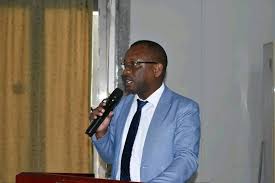
Luis Msiyadungu, program’s manager for the commission, wonders why laws governing urban settlement has increasingly become a challenge when these law exists for enforcement – not as
optional.
In her research paper “Environmental Justice and Human Rights,” legal scholar Mweya Kamchedzera argues the problem isn’t the law itself, rather its implementation.
“We have laws designed to create resilient and inclusive cities. But the challenge is enforcement,” she notes.
For a solution Kamchedzera proposes greater engagement between legal practitioners, councils, and communities, ensuring residents understand both their rights and the risks they face.
A Democracy at a Crossroads
Ultimately, Malawi’s urban settlement crisis isn’t just about where people live. It extends to whether the state can uphold its own rules, questioning whether democracy can balance rights with responsibility.
It’s about whether governance systems can act before disaster strikes, not after.
For now, the signs are disturbing.
Twelve years after a relocation order in Soche, the injunction still stands. The settlements still grow and the risks continue to intensify.
And with every rainy season, the question becomes more urgent: In Malawi’s cities, who governs and at what cost?
