


On June, 23rd, Malawi president, Lazarus Chakwera launched the Malawi Carbon Markets Initiative … a move deemed as strategic in positioning the country for prosperity as a green economy through the scaling up of Malawi’s carbon credit production – what is a carbon market? And what does Malawi expect from it? – Tamanda Matebule reports.
Energy and green economy experts are expecting gains with the establishment of the Malawi Carbon Market Initiative, launched by President Lazarus Chakwera on June, 23rd.
They are hoping the creation of this agency to oversee the trade and marketing of carbon emission offsets will scale up Malawi’s carbon credit production towards the national aspiration of the country’s development blueprint, Malawi 2063 Agenda.
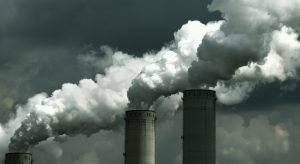
Meanwhile, using the prevailing global market prices, according to Chakwera, the potential value of Malawi’s carbon credits is estimated at 19.9 million metric tons of carbon per annum, valued at over $600 million.
Apparently there are concerns that local communities and government agencies aren’t receiving benefits from the carbon market.
Mafuno Ndamela, an energy economist, however, suggests that to address this concern; all carbon dioxide offset deals entered-into prior to the establishment of the regulatory agency be reconsidered and modified to include locals and authorities.
“Because the Malawi Carbon Market Initiative will be monitoring trade and commercialization of offset services on the Malawi market there’s need to be crafty in handling this space so the country make gains from the offset industry,” says Ndamala.
Reacting to the observation natural resources and climate change minister Michael Usi says Malawi intents to strengthen control over carbon credits management by reviewing all offset deals made in the country.
At a recent Africa Voluntary Carbon Credits Market Forum in Zimbabwe, Usi said; now, with the regulatory agency in place government would look into the matter to align its operations to practices that have worked elsewhere.
“Malawi would like to benchmark examples set out by Zimbabwe and Kenya, which are already working on renegotiating deals to include fair revenue for the government,” said Usi.
At this stage, however, he said, Malawi can’t disclose specific percentage it intent to allocate to the government, saying: “it is a bit too early for that. And I may not want to commit to any percentage at this time. However, obviously, we will go for the highest possible.”
Malawi’s launch of her Carbon Market Initiative has come at a time demand for carbon dioxide offset services is on the rise with governments around the globe imposing requirements on industries for preventing or removing harmful emissions generated by business operations.
With the establishment of the Malawi Carbon Market Initiative has become Africa’s second country to adopt carbon tax after the continent’s highest emitter South Africa, which produces over 500 million tonnes.
In spite of this while South Africa is already using the carbon levy to bankroll programs providing clean and safer energy to the vulnerable; there’s nothing tangible with Malawi which continues to debate on specific climate-related action this levy should be funding.
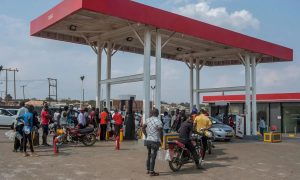
Coxley Kamange, secretary general of the minibus owners association of Malawi suggests government better acts with speed in deciding its use with the carbon levy through which revenue is being collected to raise funds to drive climate change mitigation and adaptation actions.
“For this levy, however, there must as well be some review because it only targets motorist’s contrary to UN guidelines that extends carbon tax across all activities that use fossil fuel, including burning of coal for electricity and even deforestation,” observes Kamange.
Now with the Malawi Carbon Market Initiative in place; an expert, Kandi Padambo, says this presents the nation, an opportunity for a preferred green economy over the traditional economy that has for years degraded and destroyed the environment.
But if this dream is turn into reality; he says; “everyone in the country must participate in building the capacity of the carbon markets and make them effective for the socioeconomic benefit of the nation.”
Carrying such a huge task on his head; McDonald Mafuta Mwale, chairperson of the initiative’s Steering Committee says the launch of the market is an indication of Malawi’s readiness to trade in carbon markets and climate financing.
“And our commitment goes beyond the launch of this market because as at now; the market is already available for Malawi’s carbon and we have in place measures for fair carbon business that should benefit Malawi through carbon sales,” he said.
