
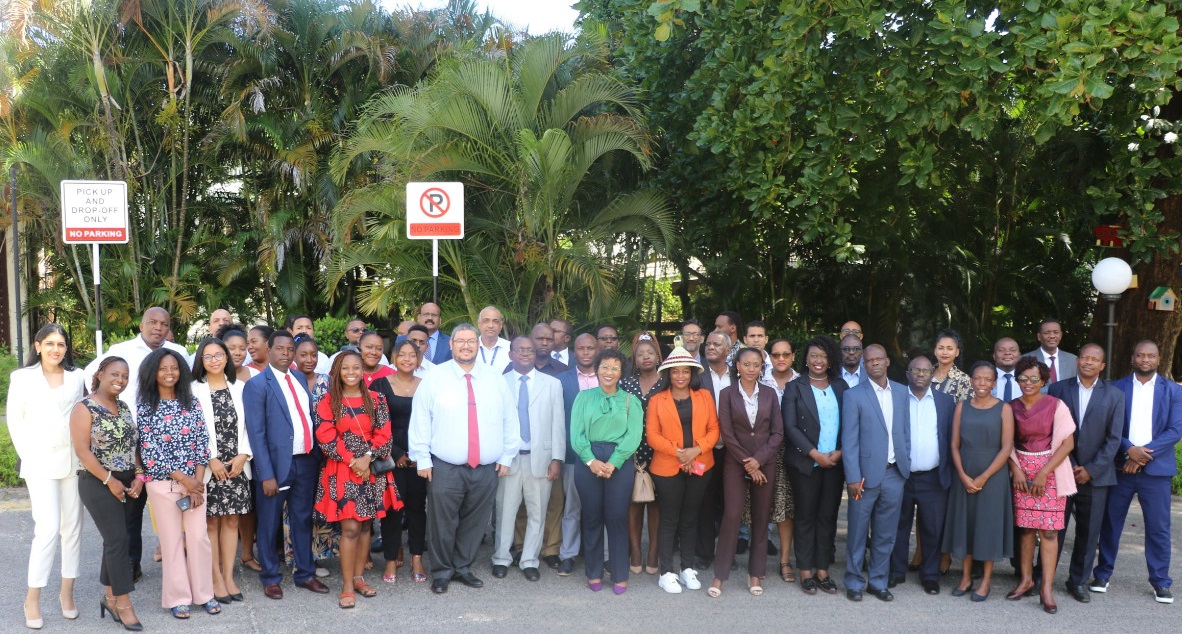

Bloc leaders for the Common Market for Eastern and Southern Africa – Comesa have raised expectations of improved trade within the region amidst efforts to reinforce air transport and ICT integration among member states.
The expectations have been raised at a media training on the Support to the Air Transport Development Program held in Mahe, Seychelles.
Among others; the training held between October 26th and 28th was also about Enhancement of Governance and Enabling Environment in the ICT sector, EGEE-ICT, a program aiming at promoting an enabling environment in the ICT industry.
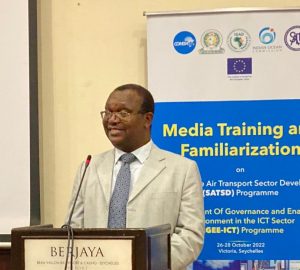
Bernard Dzawanda – senior transport economist for Comesa has spoken highly of the SATSD program as being a vehicle for encouraging the establishment of a single African air transport market as very little of our cargo within the region moves by air.
“So if we liberalize the market there will be competition in the industry which would trigger prices to lower down and also improve connectivity through air transport,” said Dzawanda.
On his part, David Sabiti team leader for the EGEE-ICT project says the program holds the key to deepening regional integration in the ICT sector in Africa.
“The project is bringing together stakeholders on the ICT space to formulate and review current laws,” Sabiti said.
On the other hand Zacharia Kigori, regional infrastructure master plan coordinator for IGAD said the two ventures were key to promoting efficient communication within the bloc which was essential for boosting trade.
He explained: “The ICT plan has great potential to contribute to effective communication in the industry hence; boosting trade. As for the air transport program it stands to ease movement of goods and people and thus facilitating cross border trade”.
Meanwhile, Mayeso Msokera, national communication coordinator for Comesa hopes Malawi will benefit significantly from the two projects.
However, he has pointed at the need for authorities to align local policies with objectives of the region as means of maximizing economic benefits from the bloc.
“We want to promote sectors like tourism which can flourish. Once there’s efficiency in operations with the air sector accompanied by governments’ commitment we can improve the infrastructure on connectivity and access to ICT,” Msokera explained.
Commenting on the experience gained from the training John Molelekeng from ESwatini Television Authority expressed his delighted saying its’ enlightened him on the aviation and ICT programs being undertaken by Comesa.
“The training has helped me identify gaps that exist between national and regional reporting and I’ve gained a lot about the aviation and ICT programs being implemented by Comesa,” Molelekeng said.
The EGEE-ICT project is essential to development and harmonization of ICT policies in the region, whilst the SATSD program is key to supporting Air Traffic sector developments thus relevant in achieving the United Nations 2030 agenda for sustainable development.
The SATSD and the EGEE-ICT programs are being implemented by COMESA as the team leader, the Southern African Development Community (SADC), East African Community (EAC), Intergovernmental Authority on Development (IGAD) and Indian Ocean Commission (IOC) with financial support from the European Union (EU) under the European Development Fund (EDF 11).
The SATSD program is part of the implementation of the Single African Air Transport Market (SAATM) Project by the Africa Union as means for promoting freedom of the air transport in the region thus advancing the African Union’s agenda 2063.
The EGEE ICT project is being implemented at a time statistic indicate the African Continent was lagging behind in internet access and usage in spite of registering a 60% growth in information communications technology since the start of the millennium.
