


Apart from the actual climate business at the CoP 27; for Malawi, another business was a search-mission for solutions to the energy crisis, electricity in particular.
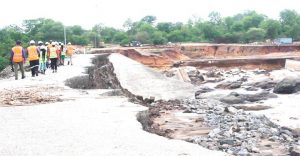
To date; electricity generation-and-supply remains a nightmare from January when the country lost 130 megawatts to Cyclone Ana, which swept to ground Kapichira Hydro Power Station.
It’s a nightmare which has led to frequent load shedding of as long as 13 hours resulting to a slowdown in economic activities both at macro and micro level.
No wonder; besides other climate and environmental commitments … Malawi leader Lazarus Chakwera came for this climate change summit in Egypt to find solutions for the worsening energy situation back home.
At the end of his six-day participation at this UN Conference of Parties; Chakwera has returned home smiles having secured a $23, 317, 073.00 [MK28 billion] solar energy deal with the Global Energy Alliance for People and Planet.
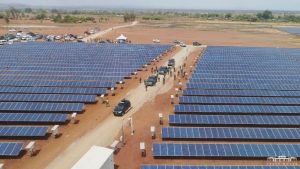
Under the deal, signed by energy minister, Ibrahim Matola, Global Energy Alliance is to provide resources for the purchase of batteries for back-up of the solar generated electricity, which once commissioned is expected to add 50 megawatts to the National Grid.
An excited Chakwera said the deal was key to improving Malawi’s energy crisis as it stands to provide reliable power backup during peak hours and at night.
“This deal is a game changer in solving energy woes. We are making progress.” Said the Malawi President.
This deal; coming at a point of electricity crisis, when its crippled business operations, pushing them on the verge of collapse due to reduced profitability has ignited some excitement.
Chimwemwe Chitsime, a bakery owner in the commercial capital of Blantyre has told MIJ online her business was struggling to remain afloat due to prolonged power outages.
“Output has reduced by 70 percent because every time there is a power cut production stops, this means we have not been able to deliver orders to customers, this is slowing down the business, productions costs are increasing and we are not making any profits”. She said.
Equally, Philip Maseko, a barber in the outskirts of Blantyre blames the prevailing electricity outages for slowing down operations of his business, which now opens only for few hours of the day that he can’t effectively operate.
He said: “with the current power situation, it’s not been easy to serve to my customers with loyalty as sometimes, I’ve had to rent a generator to power my business. But this has been costly and it’s dwindled by profit margin.”

But Dr. Betchani Tchereni, an energy economist with the Malawi University of Business and Applied Sciences thinks the deal will go a long way in reducing power challenges currently faced with the country.
However, he points on the need for effective monitoring and evaluation systems to ensure effective implementation of the project.
“50 megawatts is quite a lot, right now we have excess demand for power so this is a good development for our economy and industrialization,” Tchereni noted.
On the other hand; Kenneth Ntago, a renewable energy expert has said this was a breakthrough towards use of clean and affordable energy.
“Embracing renewable energy sources is an important tool to addressing the present energy crisis, the country stands to benefit significantly from this deal if successfully implemented, we need to think clean energy if the country is to progress”, Ntago said.
He also challenged authorities to ensure that solar products coming into the country were of quality standard.
“This is the time for regulators like Malawi Energy Regulator Authority – Mera, Malawi Bureau of Standards – MBS and Malawi Revenue Authority – MRA to make ensure importation and availability of quality and standard renewable energy products on the market.
“This will help empower citizen to utilize clean energy sources … it is also another way of promoting use of clean energy products and technologies,” said Ntago.
Earlier, United Nations Secretary General Antonio Guterres also called for scaling up of finance for renewable energy projects in developing nations which he said were key to meeting the Net-Zero target to reduce greenhouse gas emissions to limit global warming.
“that is why at the beginning of cop 27, I am calling for a historic pact between developed and emerging economies, a climate solidarity pact, a pact in which wealthier countries and international finance institutions provide financial and technical assistance to help emerging economies speed their own renewable energy transition” Guterres said.
Malawi’s power sector is one of the most severely constrained in sub-Saharan Africa with about 12 percent of the population of 18 million connected to the national power grid which approximately generates 362 Megawatts.
Besides, for the 80% of Malawians living in rural areas, access to electricity is less than one percent.
Meanwhile a report by the UN Economic Commission for Africa has warned that the continent may not meet its energy targets as it needs 40 billion us dollars to finance energy goals. It says 600 million people in Africa do not have access to electricity whilst 900 million lack access to clean cooking fuel.
The report also cites Malawi, Liberia, Central African Republic, Burundi, and South Sudan as having stagnated or reversed in electricity access.
*This article has been published with support from MESHA/IDRC grant for coverage of COP-27 by African science journalists.
