


Malawi has made a passionate plea for a human face on climate change interventions to address effects of extreme weather shocks.

Foreign affairs minister, Nancy Tembo has made the appeal amidst observation that little was being done to address extreme weather shocks effectively affecting implementation of social protection programs.
She observed; this was threatening the right to life of people, which was growingly becoming harsh and tough to bear.
Echoing minister-Tembo, a social cash transfer beneficiary, Mwai Ziponda said “social cash interventions in place lacked the human face to climate change interventions and needed revisiting.”
For instance; he said, it was hard to adhere to climate smart agriculture in the absence of climate smart technologies or non-responding technologies.
Another beneficiary of the government funded social cash transfer Wesley Magumbwa observed there was a disjoint between conference agreements like those at climate summits to what’s put in practice.
“Take the Paris Agreement, for instance. In spite of the pact raising the need for rights-based climate action … obligations like respect, promotion and protection of human rights are just on paper,” he said.
Addressing this concern Tembo said, it was time to address effects of extreme weather shocks and climate change which are continuing to derail government’s efforts and investments in social protection programs like these.
Tembo raised the matter at a high level panel discussion on the human face of climate change organized by the World Bank at the ongoing COP27 in Sharm el-Sheikh Egypt.
She said: “Think of the recent Hurricane that hit Florida in the United States, you will agree with me that by now life of the people there is back to normal, as for Malawi we still have not recovered from Cyclone Idai due to poverty levels and coping mechanisms”.
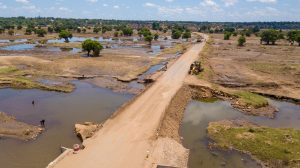
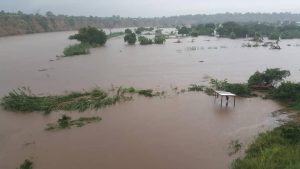
Currently, Malawi is yet to recover from the devastating effects of Tropical Cyclone Ana which washed away the country’s infrastructure including the largest power plant – Kapichira Power Station, bridges and roads.
Meanwhile, the Energy Generation Company has through spokesperson, Moses Gwaza painted a gloomy picture on meeting the December deadline to put back the plant running.
“Looking at the status of rehabilitation so far it is not practical that we will have the power plant back to power generation by December as works have been affected by delays brought by shortage of fuel among others,” Gwaza said.
However, the Minister told the panel Malawi government was making deliberate investments in the education, health, water supply and energy sectors to build resilience for local communities so that they are able to cope well with climatic shocks.
She said, this was in tandem with realization that climate adaptation and mitigation were key drivers for social economic growth hence the need to empower local communities as they stand a key pillar in building the country’s economy.
Meanwhile, World Bank managing director of development policy and partnerships, Mari Elka Pangestu, has spoken of the need to re-enforce green, resilient and inclusive development saying this can be “achieved when there is a focused investment in social protection programs and human capital which was key for achieving meaningful development.”
Echoing Pangestu; a climate economist Denson Phiri said time has come to invest in climate change interventions with focus on prevention and preparing masses to utilize early warning systems aiming to build resilience.
“But that’s not all it’s also important to put in place strategically targeted beneficiaries for such social support programs, usually exposed to higher risks of climate shocks,” said Phiri.
In response to the devastating impacts of climate change affecting vulnerable people all over the world, the Cop 27 presidency has launched the Sharm-El-Sheik adaptation agenda to build climate resilience for 4 billion people by 2030.
Among other aspirations, the blueprint intends to protect 3 billion people by installing smart and early warning systems and expand access to clean cooking for 2.4 billion people through at least 10 billion US Dollars per year in innovative finance.
According to Simeon Stiell, UNFCC Executive Secretary, the adaptation agenda firmly puts key human resources needs at its core, along with measures aimed at building resilience to climate change.
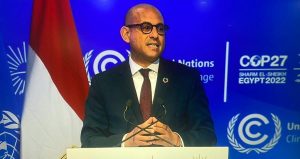
“As the growing number of climate emergencies throughout the world clearly shows, focusing on adaptation is a crucial pressing necessity, the adaptation agenda outlines multiple actions and combines the commitments of governments and nonparty stakeholders into a joint vision and a joint plan” Stiell said.
He also called for collaborative efforts among stakeholders in the implementation of the adaptation agenda saying it has great potential to assist nations to deal away with current and future impacts of climate change.
The ongoing COP27 has been described as a window of opportunity for developing countries like Malawi as it focuses on Africa and the implementation and financing at scale.
So far; African leaders have continued to push for commitment from the developed world.
*This article has been published with support from MESHA/IDRC grant for coverage of COP-27 by African science journalists.
