


It has become conventional debate now about powers that are bestowed before Malawi’s president. A school of thought has been held that the office has seen an establishment of a semi god.
The Constitution of Malawi does not only make the president a Head of State but also goes further to place them as someone who is unrealistically held into account.
Let us paint a picture of some of these powers.
The constitution provides powers to the president to hire and fire public officials including cabinet ministers, Board of Directors, and Director Generals at any time the leader wishes under a basis of his or her prerogative.
The connotations behind such prerogatives have not just fallen short in explanation, but are by far as vague.
The President may also pardon convicted offenders, grant stays of execution of sentence, reduce sentences, or remit sentences.
Apart from being the Commander in Chief of Malawi Defense Force, the president has powers to confer honors, mandating him to automatically become a Chancellor for public universities.

Nonetheless, section 91 of the constitution provides an immunity to be president against being sued in any civil proceeding with further stances that the president shall not be charged with any criminal offense.
And once the president vacates the office, he or she shall not be personally reliable for acts done in an official capacity during a time of office.
On the other hand, the president’s actions can only be checked by parliament through section 89 subsection 4 which stipulates that the president shall be called to the National Assembly to answer questions at such times as may be prescribed by the standing orders, or on a motion of the August House. But this approach has for many years failed to be effective.
Apart from that, the parliament has constitutional mandate to lay down a procedure for impeachment under grounds of serious violations of the constitution or serious breach of written laws.
Now, besides all that a situation, parliament has never initiated such a procedure, though incidents of violating constitution have been transpiring like in the words of Ernest Thindwa –a political scholar.
“The problem is Parliament has failed to exploit its full potential in terms of ensuring that powers vested in the presidential office are channelled towards public interests,” he stated.
Such presidential powers have been seen by some sections of the society as unfair and inconsistent with section 12 that restrains any institution or person to stand above the law.
But in recent times, some political leaders promised to trim such constitutional presidential powers, and one such a time was in 2020 during election campaign period.
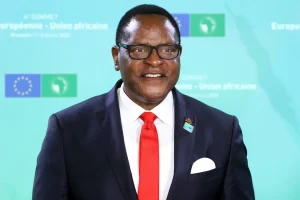
Former President Lazarus Chakwera –vowed to trim his presidential powers once he win the election.
But come into government, nothing of that kind happened.
The question is why?
Gerald Kazembe is MCP’s Deputy Publicity Secretary who sees such a call rather not so attainable at all..
“Once you are in office that’s when you see the sophistication of that office. So things are easily said from afar. Remember the framers of the constitution had a reason to provide such powers to the president,”
“But it just goes down to what kind of the president do you have whether they gonna abuse their office or not. But if we will see that we have a president who is running away with these powers is when we shall need to look at these laws,” said Kazembe.
Ironically, Kazembe still agrees the notion that the presidency in Malawi is semi-god.
“Surprisingly, the framers of the constitution wanted the president to be treated as a semi-god,” he added.
However, this is argued by a legal practitioner, Ceicious Chidothe who thinks that such a drill, would haunt presidential supremacy.
Chidothe is also of the view that semi-god of Malawi’s presidency is largely perpetuated by the underperformance of an oversight role of parliament.
“Yes it is true because of such powers the president looks to be a semigod that’s why we bow down to them. But if you want the president equally where would be the concept of leadership,” he argued.
But what could be the possible reasons for the legislative failure to hold the president accountable?
MCP’s Kazembe who is also a Member of Parliament for Mangochi Monkey-Bay constituency attributes it to widespread fear among legislators to effectually hold the president to account.
“What we are lacking is the recognition of other branches of government like the legislature. Most of the Members of Parliament have fear to speak on these issues or perhaps hold the sitting president into account,”
“What we need is to have parliament which is not a yes-sir kind of legislature,” said Kazembe.
Concurring with Kazembe, the expert Thindwa links the underperformance of parliament to partisanship among the legislatures, citing the scenario pushes the MPs to forget their oversight roles.
He said, “Parliament has underperformed because of too much partisan politics. If parliament would have performed to its full potential, certainly we could not say president has too much powers,” said Thindwa.
Now going forward what should be done?
Chidothe sees the need for an honest review of the laws.
“We should have a scenerio where other positions should not be appointed by the President,” he suggests.
As it would rather appear of a scale, the presidency is a semi-god. This status has evidently become agonizing given the failure by the public to hold the leaders to account.
Coupled with that a situation, it is also arguably clear that there is a need for proper scrutiny to the existing laws on how to hold a sitting president accountable.
However, the former speaker of parliament, Henry Chimunthu Banda says the constitution has adequate presidential provisions, and believes that the presidency in Malawi hold too much power.
Banda thinks that presidents in Malawi are not held accountable particularly when the ruling party has a lion’s share in the national Assembly.
“I wouldn’t agree with that notion. A semi-god cannot be called to parliament to answer questions. But the status of holding the president accountable practically relies on the number of the ruling party in the Parliament,” said Banda.
Laws surely are there but most of them have gray areas.
One reason could be the unchecked powers president possesses. A good example of such laws is the parliament’s mandate for impeachment as the lawyer Chidothe points out, “The reasons of impeachments can always be satisfied but that law here in Malawi is just on paper.”
The writing has remained on the war that concerns of abuse of power comes out. But what’s the measure to an office that can literary not be questioned? Even by the voters who braved time to choose their leaders. Is time now?
