

A multi-million-dollar processing factory built to help Malawi export higher-value pigeon pea products to India has never processed a single grain. Ten years after its commissioning, the country continues exporting raw produce while the machinery develops rust and gathers dust. Tamanda Matebule investigates.
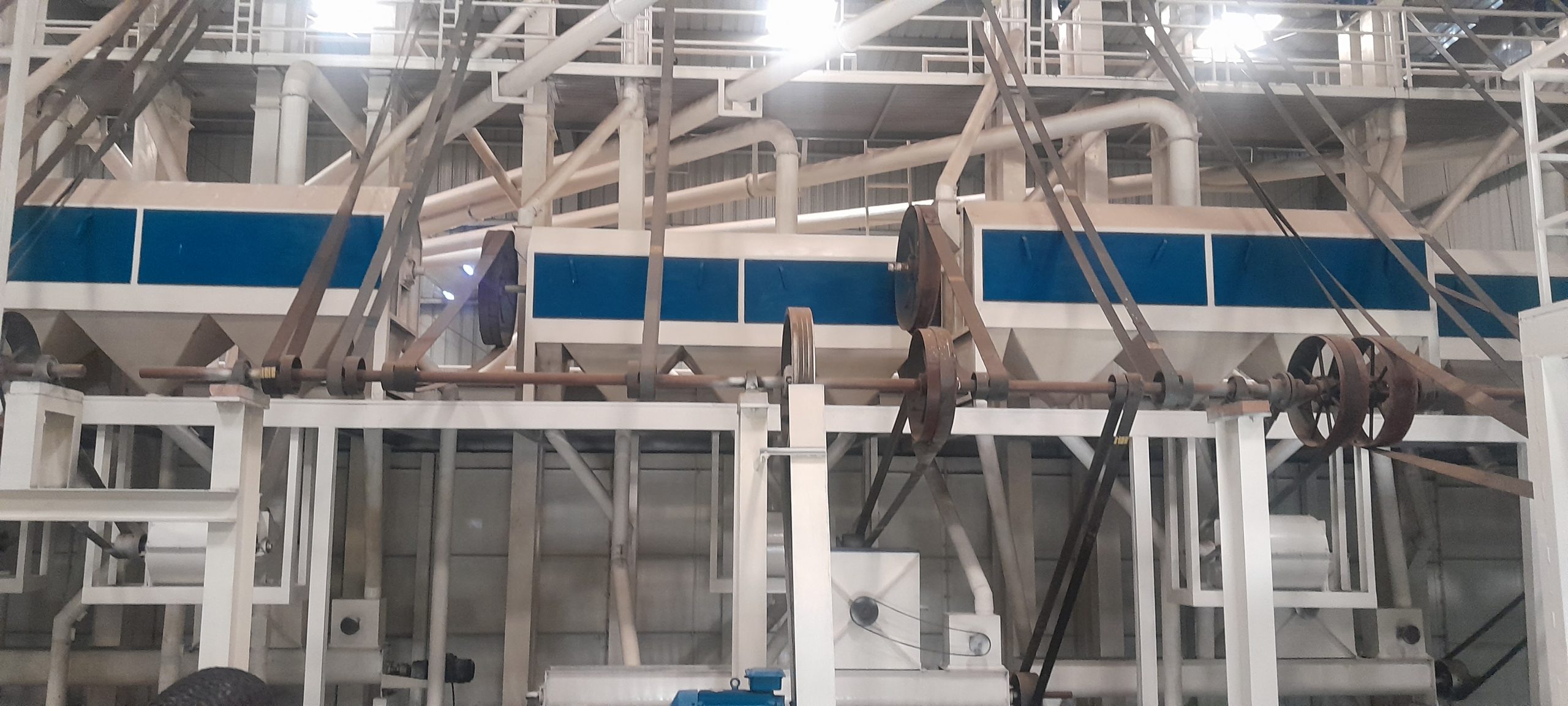
Inside the fenced compound of Admarc’s complex in Luchenza stands a silent multi-million-dollar processing plant – its towering steel equipment untouched, its conveyor belts still, and its promise unrealised.
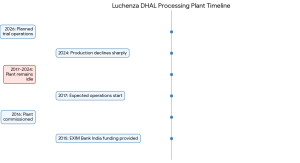
Built with $8.46 million in Indian funding to transform Malawi’s pigeon pea exports, the dhal processing facility has never processed a single grain since its commissioning in 2016 – only standing as a symbol of unfulfilled promise.
Nearly a decade later, the plant remains idle – raising troubling questions about how such a flagship export project stalled before it even began.

Meanwhile, Malawi continues exporting raw pigeon peas instead of higher-value processed dhal, forfeiting potential export earnings and undermining a strategy meant to diversify the country’s foreign exchange beyond tobacco.
Financed through an Indian grant in 2015, as part of a broader line of credit aimed at strengthening Malawi’s infrastructure and expanding trade between the two countries. The $8.46 million project supported construction of two dhal processing plants, one in Liwonde and another in Luchenza.
But years later, both facilities remain largely unused — a stark example of how poorly executed public investments can undermine national development plans.
This investigation focuses on the Luchenza plant, a facility that could help Malawi meet export demand in the Indian market.
A grand export vision
Negotiated during the first presidential term of Peter Mutharika, the project formed part of a broader economic strategy aimed at strengthening Malawi’s agricultural exports through value addition.
Under the arrangement, Malawi was expected to supply 50,000 metric tonnes of pigeon peas annually to India, while the processing facilities would allow the country to export processed dhal instead of raw grain.
The deal was expected to strengthen trade ties with India while helping Malawi transition from a predominantly import-dependent economy into a producing and exporting one.
But the dream stalled almost immediately after the factory was completed. The heavy-duty plant never conducted even a test run.
A failed handover
Documents and interviews conducted during this investigation point to serious lapses in the handover process between the Indian contractor, KKC Nirman, and the Agricultural Development and Marketing Corporation (Admarc), the state-owned company responsible for operating the facility.
Senior officials at Admarc confirm the contractor left without properly training local engineers or transferring operational knowledge. Bright Mwambinga, the factory manager, says the absence of technical training left the corporation unable to operate the plant.
He says: “Their unceremonious departure left our engineers without the capacity to handle the factory. Our engineers needed to understand the process flow and how the machinery operates, but that training never happened.”
This investigation also established another troubling gap: Admarc does not possess complete operational manuals for the factory, documents essential for running and maintaining complex industrial equipment.
Without those manuals and technical training, the processing line has remained dormant since installation.
Attempts to reach the contractor, KKC Nirman, through its official website and email addresses were unsuccessful.
The Indian High Commission in Malawi was also contacted for comment regarding the project but had not responded by the time of publication.
The cost of neglect
While the factory still stands intact, years of inactivity have taken their toll.
Admarc Chief Executive Officer Ben Botolo confirms that bringing the plant back to life will require significant financial investment, effectively adding new costs to an already expensive project.

The corporation will need funds to purchase spare parts, repair aging machinery, and hire consultants capable of training engineers to operate the equipment.
Botolo says: “We will need supplementary funding to secure certain spare parts, train our engineers and engage consultants who can help us operationalise the facility. When this happens, we hope to conduct trial operations by late 2026, initially targeting the local market before expanding to export markets.”
Missed export opportunities
The factory’s dormancy comes at a time when Malawi has struggled to fully capitalise on the Indian pigeon pea market, and trade data from the Indian High Commission shows fluctuating export performance in recent years.
Malawi exported 52,000 metric tonnes of pigeon peas in 2022, valued at $13.65 million. By 2023, exports had reached $49.29 million, but by the first quarter of 2024, export earnings had dropped to $9.62 million.
The decline reflects broader challenges facing Malawi’s pigeon pea industry.
Production has dropped from 26,245 metric tonnes last season to 17,265 metric tonnes in the 2024/2025 farming season.
Farmers attribute the decline partly to reduced incentives and unstable markets.
Meanwhile, Malawi has reportedly lost 64 percent of export earnings since India introduced tighter trade policies governing pigeon pea imports in 2017 – Ironically the same year the dhal processing plant was expected to begin operations.
Between 2016/2017 and 2020/2021, Malawi’s pigeon pea exports to India dropped from $39.32 million to $9.05 million.
For analysts, the failure to operationalise the processing plant represents a missed opportunity to stabilise and expand this lucrative market.
“A reckless waste”

Agriculture policy analyst Leonard Chimwaza describes the situation as a costly example of failed development planning; arguing the situation undermines Malawi’s long-standing push for agro-industrialisation.
He says: “This facility was designed to enhance value addition and boost exports. It is baffling that such a high-level processing plant has remained non-functional since its installation.
“You build a factory to stop exporting raw pigeon peas and instead export processed dhal, which would bring more revenue, yet the machine stays idle for years. It raises serious questions about planning and accountability.”
Parliament also has its’ concerns.
Anthony Kamoto, chairperson of the Parliamentary Committee on Agriculture, says the prolonged inactivity contradicts the country’s National Export Strategy, which prioritises value addition to diversify export earnings beyond tobacco.
Government promises revival
Government officials acknowledge the problem but insist efforts are underway to revive the plant — although doing so will require additional financing.
Deputy Minister of Agriculture Thoko Tembo says operationalising the facility remains a priority if Admarc is to contribute meaningfully to Malawi’s economic growth.
“The dhal processing facility has the capacity to transform the pigeon pea industry into a competitive export enterprise capable of generating much-needed foreign exchange,” Tembo says.
For farmers, however, the delay has been deeply disappointing.
When the project was first announced, growers envisioned a thriving pigeon pea industry supported by improved markets, processing capacity, and international demand.

Susan Chimbayo, chairperson of the Pigeon Peas Association of Malawi, saying “farmers had hoped the factory would transform rural livelihoods and believed this facility would bridge the gap between rural farmers and international buyers, especially in India.”
Development partners, including USADF and Christian Aid, even supported farmer cooperatives with training in anticipation of a stronger pigeon pea value chain.
The silent factory – symbol of unfulfilled promise
For now, the towering steel machinery inside the Luchenza plant remains still – a multimillion-dollar reminder of how an ambitious export dream stalled before it began, leaving Malawi exporting raw pigeon peas while the factory built to process them waits to run for the first time.
