

The government has been advised to invest more in addressing worsening urban poverty by extending social protection programs to the urban masses.
The advice comes at a time most poverty alleviation interventions are being implemented in the country such as social protection programs targeting rural masses.
Costly Chanza-Director of Town Planning and Estates Services for Blantyre City Council raised the issue as donor partners World Bank’s technical mission is in the country to appreciate achievement under the Covid 19 Urban Cash Initiative (CUCI) which was aimed at cushioning economic hardships experienced in the wake of the pandemic.
This is a cash transfer program that had for the first time specifically targeted urban areas in the cities of Blantyre, Lilongwe, Mzuzu, and Zomba to cushion the urban poor from falling into abject poverty following the devastating effects of the Covid 19 pandemic.
According to Chanza, the poverty narrative has often been attached to people living in rural areas and living behind urban dwellers.
He however emphasized the need for government to also invest more in projects that will address worsening urban poverty as the number of people facing poverty in such areas is on the rise yet their means of survival continue to dwindle.
Bessie Msusa-Chief Economist in the Department of Poverty Reduction and Social Protection-Ministry of Finance-disclosed that government plans to scale up social protection projects in urban areas with livelihood interventions that will ensure the sustainability of improved income generating activities for the beneficiaries.
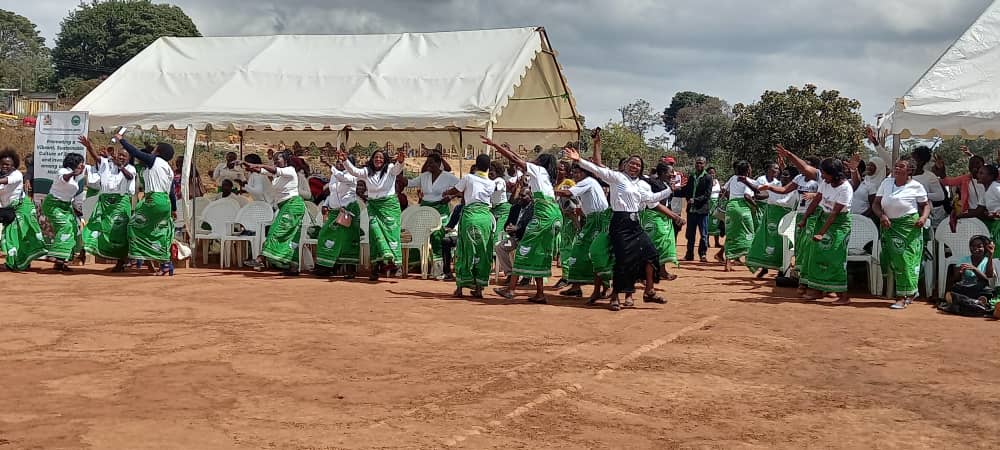
For instance, under the World Bank-funded CUCI program, COMSIP Cooperative Union implemented the Livelihoods component that has seen those in COMSIP groups saving and investing in business beyond cash disbursement.
For Caro Chinyama a CUCI beneficiary from Chilomoni township in Blantyre, Covid 19 had left her destitute as her husband had lost his job and her small-scale business selling farm produce had collapsed.
However, after receiving money from the Covid-19 urban cash initiative Chinyama became a member of COMSIP cooperative under the Chigwirizano cluster where COMSIP built the capacity of beneficiaries to better manage their businesses and improve their savings and investment skills.
“Life used to be tough, but now I can afford to provide for my family through my booming business of selling rice and beans. COMSIP also trained us to use available resources to improve our nutrition levels so I now have a vegetable garden which I not only use for consumption but also to generate income by selling the same to other people”. Beamed Chimenya
Echoing Chinyama is a 45-year-old mother of three-Vera Masina who benefitted from the urban cash initiative and became a COMSIP member who told MIJ Online that the K70,000 cash support assisted her to revamp her business selling second-hand clothes (Kaunjika) in Chiilomoni Township.

According to Masina, being in a cooperative has improved her business management skills as well as access to affordable loans whenever she needs a top-up for her business.
Meanwhile, Hugo Brousset, Social Protection Specialist for World Bank Malawi said he was impressed with achievements registered in the CUCI program where beneficiaries under COMSIP groups have improved their income and business management skills.
Brousset has since advised the beneficiaries to join cooperatives to expand their income activities and support their children who are the future generation of Malawi.
The K20.5 Billion World Bank funded-Covid 19 Urban Cash Initiative was implemented in January-June 2021, comprising three months of cash disbursement to targeted beneficiaries in the four cities of the countries.