

Ahead of the climate change conference – COP 27; Malawi has dug deep into annuls of commitments, and is now demanding accountability on a 100-billion US-dollar-pledge from developed nations.
The commitment dates back to the UN climate change conference in 2009 (COP 15) convened in Copenhagen, Denmark where developed nations pledged this amount of support yearly by 2020 to finance climate change activities in developing nations.
However, years down the line, the target remains far from being met courtesy of dismal commitment from industrialized countries whose contribution has remained too little raising fears as whether at all this pledge would at-all be met annually until 2025 when a new collective global climate finance goal will be set.
And concerns are being raised with Africa continuing to lose between 5% and 15% of its GDP due to the climate crisis in spite of contributing to only 3% of greenhouse gas emissions.
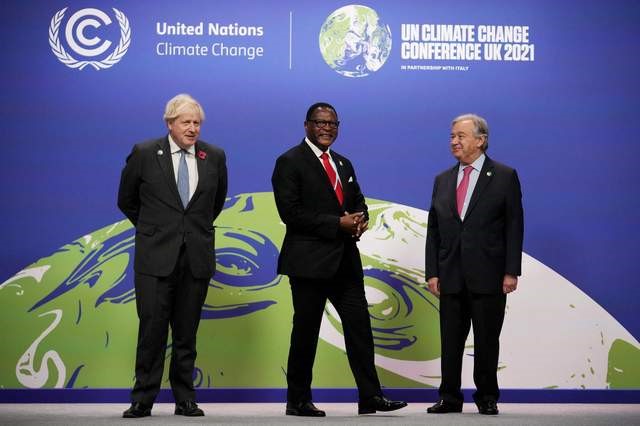
No wonder; came 2021, at the Cop 26 Climate Change Summit in Glasgow, Scotland; Malawi leader Lazarus Chakwera then serving as Southern African Development Community chairperson delivered an inquiry.

He said: “People around the world have been asking about Cop 26, what exactly is the point of this conference. And we must answer them by the urgent loosening of the debt that strangles climate change adaptation efforts in vulnerable regions like SADC.”
A year later; its Cop 27, the turn for Africa and the setting is Sharm El Sheikh, Egypt between November 6th and 18th and government is demanding that developed nations live up to their word.
Eisenhower Mkaka, natural resources minister says the nation needs 46.3 billion US dollars to effectively carry out its climate change interventions.
“The fight against climate change is a global task so we are pleading with developed countries to commit to their climate finance pledge so that developing countries can achieve their climate goals,” Mkaka said.
But there’s more to look out for.
He adds, “Malawi intends to follow up on the bill gates foundation commitment of more than 800 million US Dollars aimed at supporting agriculture innovations in developing nations”.
On the other hand; Werani Chilenga chairperson of the Parliamentary committee on natural resources says the COP 27 offers a platform for developing nations to demand necessary financial support from industrialized countries for their mitigation interventions on climate change.
“The goal is to reduce global temperatures with an average of 1.5 degrees Celsius; for this to happen, developed nations must fulfil their climate fund commitment,” he said adding “but it’s also important to link local met-departments with developed nations to help improve early warning systems to detect natural disasters at an early stage”.
However, given Malawi’s the energy crisis … with only 12% of the population connected to the national grid Dr. Betchani Tchereni, an energy economist with the Malawi University of Business and Applied Sciences says Malawi needs such funding to expand its renewable energy projects.
“We need to revive the energy sector and embrace alternative sources of power but this is costly, Cop 27 is here and we want to push for funds that would facilitate implementation of renewable energy projects,” Tchereni said.
But an environmental campaigner, Mathews Malata is hopeful that the conference in Egypt must help countries negotiate a new window of financing on impacts of climate change beyond mitigation and adaptation.
“Having discussed losses and damages for a long time we hope Cop 27 presents a platform for addressing this issue effectively,” Malata said.
And Maria Dop Valle Ribeiro, UN Resident Coordinator has told MIJ online, “the ultimate aim of climate summit was to enhance negotiations on financing for adaptation as well as mitigation”.
Africa is baring the most of the impact of climate change in spite of contributing only 3 to 4 % of carbon pollution, hence the call for developed nations significantly polluting the space to commit to their climate finance pledge.
Meanwhile, according to the African Development Bank, Africa loses between 7 billion and 15 billion dollars annually due to climate change and this was likely to increase to 50 billion US dollars by 2030.
